
IN THIS ISSUE (18) - 05 October 2026
🎯 Bitcoin halving cycles are almost accurate
📅 No Hormuz peace deal yet
💥 OpenAI launches Dots, a rival to Meta’s Muse
THE WEEK IN MARKETS
August core PCE, the Fed’s preferred inflation gauge, came in cool at 0.2% month on month and 3.0% year on year, trimming odds of an October hike. The bond market shrugged anyway: the 10-year yield pushed to 5.25%, its highest since 2007. Oil eased for a second straight week as supply fears cooled, unwinding some of the premium that had Brent near $100, though there’s no actual US-Iran deal on the table yet.
Crypto spent the week giving back some gains. Bitcoin has slipped about 4.5% off last week’s eight-month high to sit near $83,500, with elevated long-end yields doing the damage. Bitget confirmed a $351.6 million exchange breach, the largest of 2026 so far, a reminder that custody risk hasn’t gone anywhere.
🔥 WHAT’S UP: US 10-year Treasury | 5.25% | 1 week
💧 WHAT’S DOWN: Gold | -2.12% | 1 week
Data correct as at 29 September 2026.
ALPHA CHECK
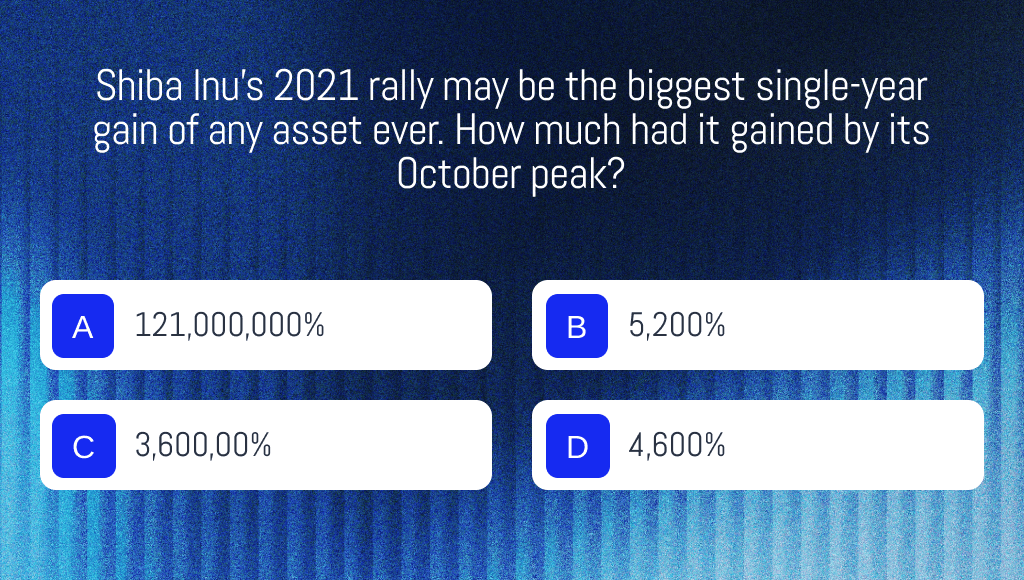
Got your answer? Read on to see if you nailed it.
THE BIG READ
Why Bitcoin halving cycles theory keeps almost working
Bitcoin has cut its own supply in half four times now, on a schedule nobody controls and nobody can move. What happens in the year and a half after each cut is where the theory gets interesting, and where it’s starting to come apart.
The calendar has never missed
Line up all four halvings and the pattern is almost suspiciously tidy:
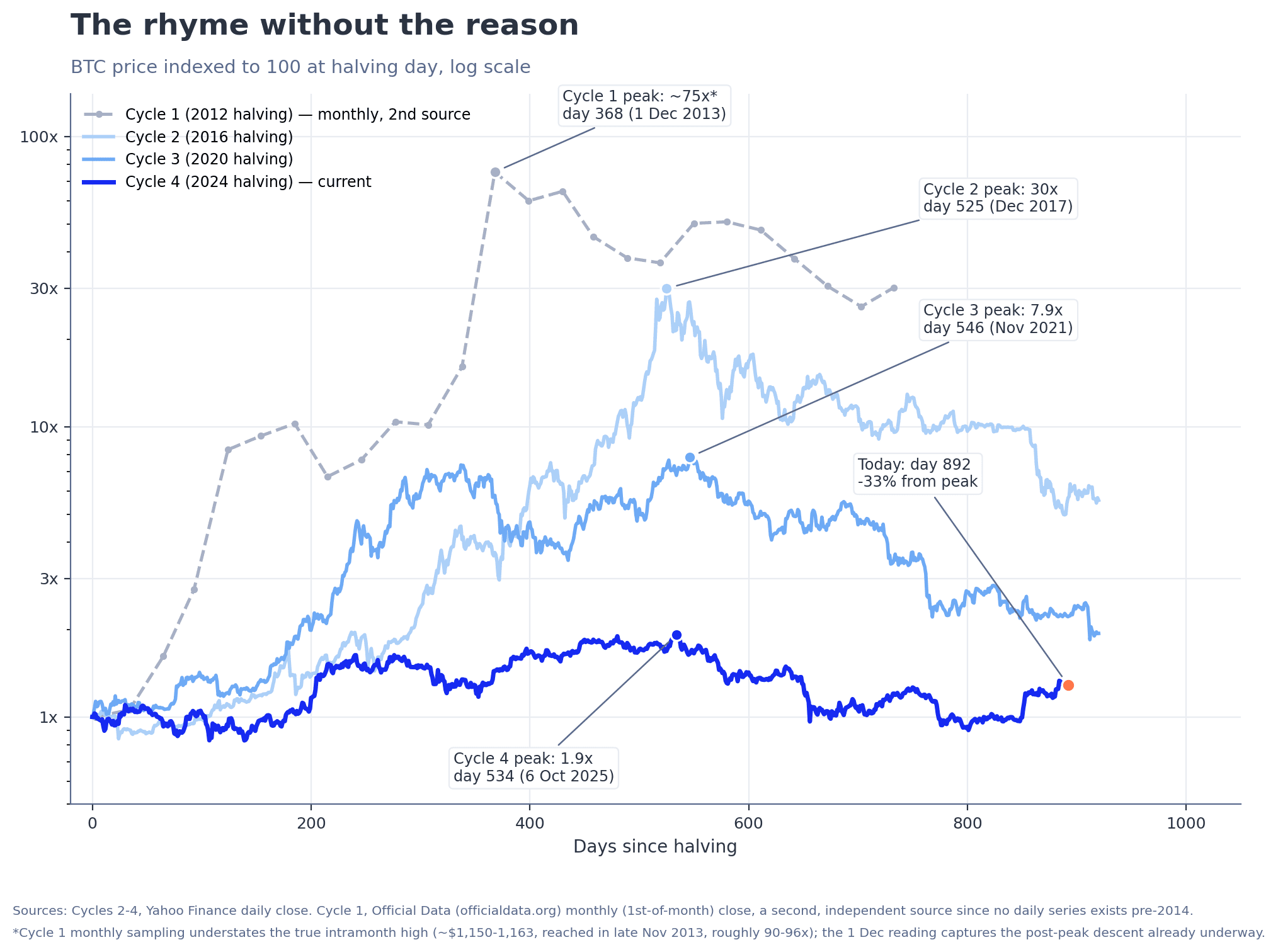
2012 halving → peaked roughly 367 days later
2016 halving → peaked 525 days later
2020 halving → peaked 546 days later
2024 halving → peaked 534 days later
Four cycles, four peaks, all landing in the same 12-to-18-month window, all triggered by an event that has nothing to do with price and everything to do with a block reward getting cut in code. That consistency is the entire case for the theory. It is also, on its own, a coincidence generator waiting to be mistaken for a law.
The number the theory doesn’t want you to notice
Here’s what the pattern doesn’t repeat: the size of the move.
2013 peak: roughly 96x from halving price
2017 peak: roughly 30x
2021 peak: roughly 7.9x
2025 peak: roughly 1.9x
2025 was the first year after a halving in Bitcoin’s history to finish in the red, breaking a script that had held for three straight cycles. The math behind the shrinkage isn’t mysterious. Halving Bitcoin’s issuance mattered enormously when the asset was worth $200 million. It matters much less when the asset is worth $1.6 trillion, because the same dollar of demand now moves a market cap forty times larger.
What actually changed this time
The 2024 cycle also broke the pattern in a more structural way: it’s the first one to run alongside spot ETFs. Standard Chartered’s Geoffrey Kendrick has made the case that future price gains will effectively be driven by one input now, ETF buying, rather than the retail wave that used to build slowly over the 12 months after a halving. A few reasons that matters:
Institutional allocators don’t chase parabolas the way retail does. They rebalance quarterly.
That pulls demand forward and flattens the curve out.
It’s one read on why this cycle peaked at 534 days almost exactly on the historical clock, but produced a fraction of the multiple.
Indexed against every prior cycle on a single chart, the divergence is hard to argue with.
Bitcoin is currently trading about 33% below that October peak, 892 days into a cycle that historically starts favouring buyers again well before day 1,000. Whether that holds is the one thing four data points can’t tell you.
Working and broken are not opposites
The uncomfortable version of the halving cycle theory is that it’s made two separate claims wearing one name.
It has correctly called “when” four times running.
It has gotten worse at calling “how much” every single time.
The next potential halving lands around April 2028. If the day-count holds, the next peak window sits somewhere in 2029. If the multiplier keeps shrinking the way it has every cycle so far, whatever that peak looks like, don’t expect it to rhyme with October 2025.
QUICK TAKES
🧠 Memory never forgets a beat
Micron’s fiscal Q4 results landed Wednesday, and they were huge by any measure. Revenue hit $54.2 billion, up 379% year on year and comfortably ahead of the $51.1 billion Wall Street expected. Margins are nearing 85% as the AI memory shortage keeps pricing power firmly with chipmakers in the AI investment stack. Next quarter guidance is even stronger at $61.5 billion versus $57 billion expected. The stock is up more than 500% over the past year, and in 2026 it has kept beating even the most optimistic valuations. Read more
📈 Crypto just had a freakishly good quarter
Bitcoin gained roughly 43.5% in Q3 2026, climbing from about $58,500 to around $84,000, its second-best third quarter on record and beaten only by 2017’s 80% run. Ethereum did even better, up 71%, its best Q3 ever. Both numbers are stranger than they look: Q3 is historically crypto’s weakest quarter, averaging single digits most years. Q4 is usually the strong one, which either means this rally still has room or already spent it early. Read more
🤖 Americans have made up their minds about AI, mostly
A new Gallup survey backing up this week’s Bloomberg report found 97% of Americans think AI should be subject to rules and regulations, and 72% want independent experts, not governments and not the companies themselves, doing the actual safety testing. That’s about as close to consensus as anything gets in US polling right now. Read more
ALPHA CHECK - REVEALED

PROBABLY SOMETHING
OpenAI answered Meta’s Muse on Tuesday with Dots, same pitch, different logo: always-on, its own cloud computer, built to do everything so you don’t have to ask twice. Muse spent September racking up 5 million downloads and Meta’s best stock month since 2013. Whether the category fits two “do everything for you” agents, or this just becomes the next platform war fought with other people’s calendars, is the actual story. Watch here